Quick Nav
- The Survival Mechanics of Regional Art Infrastructures
- Decoding the Paper Trail of Avant-Garde Exchange
- How Exhibition Data Maps Artist Mobility
- Cross-Pollination in Buffalo’s Experimental Venues
- Preserving the Logistical Legacy of the Avant-Garde
The Survival Mechanics of Regional Art Infrastructures
An avant-garde exhibition can appear self-contained: work on the walls, an opening-night crowd, perhaps a performance in the back room. That view leaves out the network that made the event possible. Rent agreements, shared tools, borrowed vehicles, temporary lodging, and reciprocal bookings determined whether an experimental program could continue after the audience went home.
For the archival team, establishing the scale of this infrastructure required looking beyond finished artworks. Cataloging physical gallery dimensions and monthly overhead costs created a baseline for understanding how independent spaces survived in practical terms. Records place warehouse rent between $1.15 and $1.45 per square foot annually, while commercial leases commonly ran from 36 to 48 months. Those commitments shaped programming long before a curator selected an artist.
Lease Terms as Curatorial Conditions
A three- or four-year lease gave an exhibition venue a degree of continuity, yet it also imposed a fixed obligation on an organization built around uncertain income. A warehouse with room for installations and live sound could support ambitious work. The same footprint brought heating costs, maintenance, and pressure to keep the calendar active.
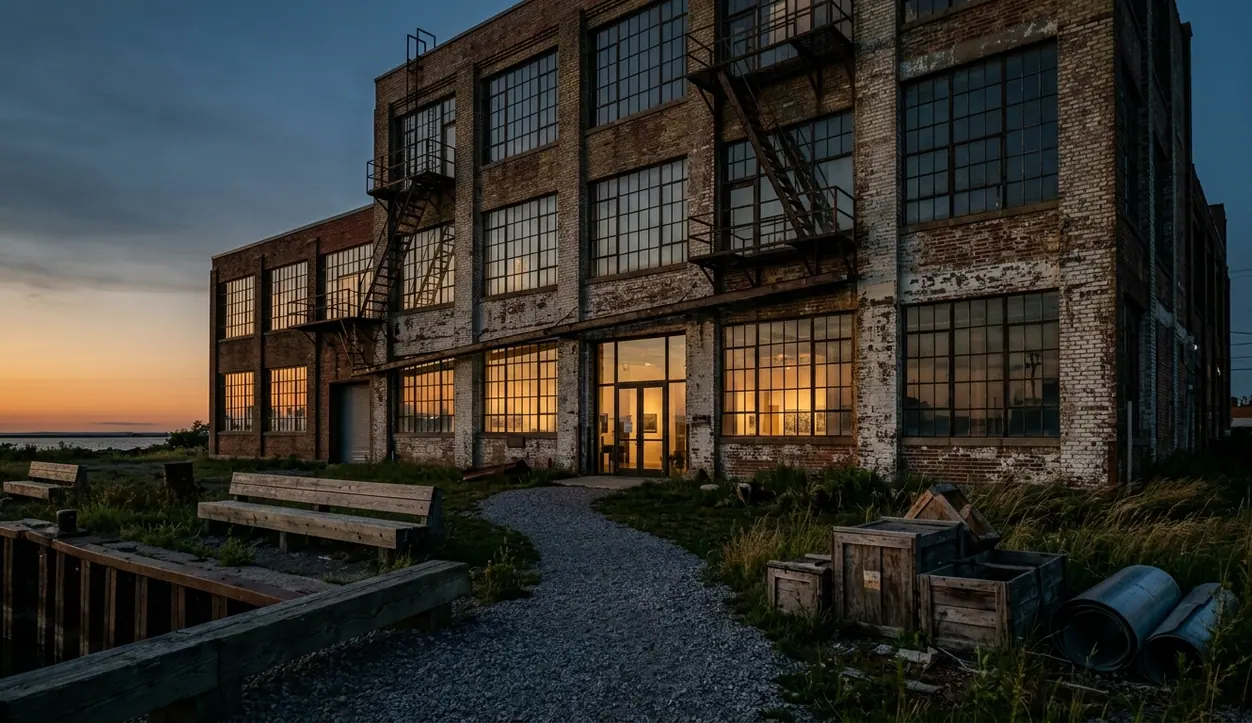
This material context changes how Big Orbit Gallery should be read within Buffalo’s cultural history. Big Orbit: exhibition venue functioned through relationships extending beyond a single building. Its place alongside organizations such as Hallwalls Contemporary Art Center and the wider University at Buffalo arts community formed part of a regional support structure through which artists, equipment, and ideas circulated.
The survival of regional experimental art depended on ordinary commitments recorded in leases, calendars, invoices, and handwritten agreements.
Ignoring those records produces an incomplete account of artistic independence. It also removes a useful blueprint for contemporary spaces seeking to sustain serious work outside major coastal centers.
Decoding the Paper Trail of Avant-Garde Exchange
The archive becomes especially vivid when a crate enters the story. Installation crates documented in the surviving records weighed between 150 and 420 pounds. Moving one from Chicago to Buffalo by ground freight took roughly four to seven days, which meant that a missed collection, an incorrect loading address, or a delayed venue handoff could alter an exhibition schedule.
Crates Carried Objects; Letters Carried Intent
Archivists separated shipping manifests from curatorial letters during processing. This distinction tracks two related forms of movement: manifests document where physical materials went, while correspondence records how curators exchanged proposals, references, and artistic positions. The categorization of ground freight manifests versus ideological correspondence prevents one stream of evidence from flattening the other.
A freight document may identify a route, crate weight, and delivery window. A letter can explain why the work mattered to a Buffalo audience, which venue had offered a reciprocal date, or how an installation related to another regional program. Read together, the records outline a deliberate system of national exchange.
Archival gaps remain in some early periods, so the paper trail cannot recover every conversation. Surviving documentation still shows that administrative work carried experimental concepts across long distances. Informal arrangements often leave the faintest documentary trace.
Follow Both Trails
Researchers should connect each manifest to nearby booking notes, letters, labels, and calendar entries. Treating a shipping record as a complete account hides the curatorial negotiation surrounding the shipment.
The grassroots logistical archive also excludes formal commercial gallery sales records. That boundary keeps the inquiry focused on exchange, hosting, transport, and collaboration within experimental arts networks rather than on conventional market transactions.
How Exhibition Data Maps Artist Mobility
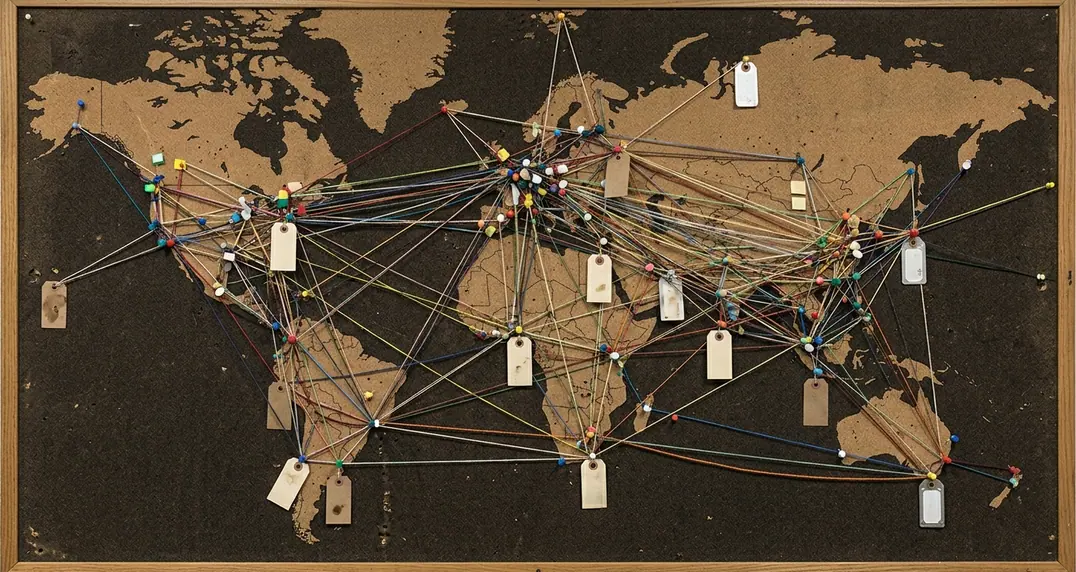
Opening dates offer clean points for a timeline, which makes them tempting evidence. An early mapping attempt relied on those dates alone. The resulting routes missed the installation periods when artists worked in the city, met local organizers, adapted pieces to unfamiliar rooms, and often began conversations that shaped later bookings.
The method was revised to track the full duration of an artist’s physical presence. Available records place residency and installation periods between 10 and 14 days, while individual legs of the regional circuit covered approximately 450 to 600 miles. Those intervals reveal Buffalo as a working node between the Midwest and the East Coast, rather than a brief stop marked by one evening on a calendar.
Mapping Presence Instead of Openings
A useful mobility map begins with four record types:
- Exhibition schedules establish public dates and venue sequence.
- Installation notes identify when physical preparation began.
- Freight records indicate when work moved between cities.
- Lodging and host-housing records provide evidence of the artist’s actual stay.
The final category creates the hardest problem. Informal lodging logs were easy to discard, and formal exhibition files rarely recorded a guest sleeping in a curator’s spare room. The exact duration of many visits therefore remains uncertain. Researchers should mark inferred arrival and departure dates as ranges instead of converting them into false precision.
Once installation time enters the map, programming choices look less isolated. A visiting artist could encounter local practitioners, see another venue, or discuss a future event during a stay lasting nearly two weeks. These encounters help explain qualitative shifts in exhibition calendars. They also show why Big Orbit Gallery belonged to a mobile curatorial conversation whose effects exceeded any single opening.
Missing Host Logs
Do not assign an artist’s arrival date from the opening alone. Preserve the distinction between a confirmed stay, an inferred travel window, and an undocumented interval.
Cross-Pollination in Buffalo’s Experimental Venues
Visual art and experimental music shared more than an audience in Buffalo. They occupied the same rooms, relied on overlapping crews, and negotiated access to the same power, loading, and acoustic resources. A gallery could begin the day with a de-installation and end it with a live sound event.
Four Hours from White Cube to Sound Room
Records describe acoustic turnaround periods of four to six hours for converting a visual gallery into a performance space. In mixed-use warehouses capable of accommodating 120 to 165 attendees, that compressed schedule demanded close coordination. Artwork had to leave safely, cables needed protected routes, loudspeakers required placement, and a sound check had to finish before doors opened.
Curators sometimes scheduled these activities to overlap. The practical aim was to maximize use of the venue, but proximity created an artistic consequence: musicians encountered installers, visual artists heard rehearsals, and unfinished spatial arrangements became settings for spontaneous collaboration. The room itself acted as an incubator.
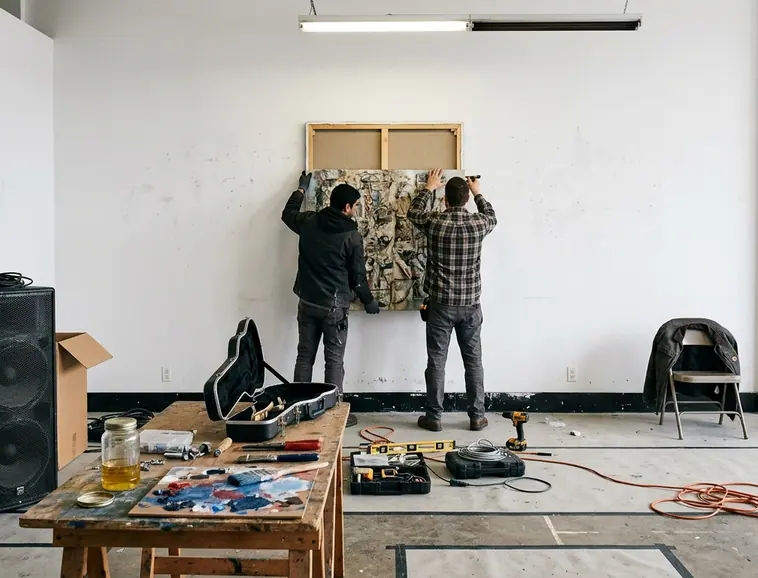
This integration strengthened Buffalo’s experimental ecosystem during periods of financial precarity. Shared booking strategies allowed multidisciplinary venues to host ambitious touring work without maintaining separate facilities for every medium. Big Orbit Gallery’s exhibition program and Soundlab performances belong in the same operational history because both depended on rapid conversion, technical cooperation, and trust among organizers.
Criticism Meets a Moving Target
Reviews provide another layer of evidence, though they capture a public encounter rather than the complete logistical process. Writing by Richard Huntington, Buffalo News art critic and reviewer, helps situate exhibitions within their contemporary reception. Administrative files answer a different question: how did the event reach the room in the first place?
Placing criticism beside schedules, sound-check notes, and de-installation plans restores the relationship between aesthetic response and material production. It also guards against treating performance as a temporary supplement to the visual program. In these venues, sound formed part of the curatorial structure.
Preserving the Logistical Legacy of the Avant-Garde
A booking note can seem minor beside a sculpture, recording, or exhibition photograph. Yet the reverse side may contain the detail that explains an entire event: who lent the amplifier, where a touring artist slept, or how two venues divided travel costs. For that reason, the preservation protocol mandated digitization of the backs of notes and envelopes as well as their fronts.
Marginalia Deserves Full Capture
Per gallery data, the logistical archive exceeds 3,200 individual pieces of correspondence. A complex document requires on the order of 15 to 22 minutes for digitization and metadata tagging. That work includes more than producing a legible image. Staff must retain physical sequence, capture annotations, identify related events, and record enough context to reconnect the item with manifests or calendars.
A disciplined workflow can keep those relationships intact:
- Digitize every side of each note, envelope, insert, and attached label.
- Record names, venues, dates, routes, equipment, and associated exhibitions in structured metadata.
- Link correspondence to freight and booking records without merging their distinct functions.
- Preserve uncertainty when handwriting, dates, or identities remain unresolved.
- Document archival exclusions, including formal commercial sales material outside the grassroots scope.
Comparable repositories concerned with the preservation of administrative and logistical records demonstrate why contextual description matters. A scan detached from its envelope, reverse-side note, or event file may retain its words while losing its archival meaning.
Capture the Reverse
Photographing or scanning only the written face of a booking note risks removing the equipment loans and cost-sharing arrangements that held an event together.
The lasting value of Buffalo’s avant-garde venues lies partly in this operational knowledge. Their records show how modest organizations coordinated national exchange, converted rooms between media, and supported mobile artists through local relationships. Curators and historians should therefore preserve correspondence, envelopes, manifests, calendars, and host records with the same urgency given to artworks. Make complete logistical capture the default archival policy for every experimental arts collection.