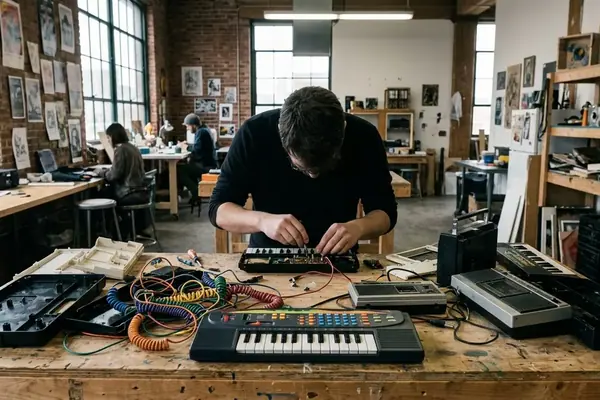
The Void and the Vanguard: Surviving the Funding Collapse
The early 1980s funding collapse of Media Study Buffalo created a critical void in the local arts ecosystem. How does experimental art survive when traditional patronage vanishes? While Hallwalls Contemporary Art Center had established a precedent for alternative models, the immediate aftermath required a proven survival mechanism to keep the avant-garde alive in Western New York.
Early organizers initially drafted a commercial gallery business plan. They abandoned it after on the order of three months. Local collector base analysis showed insufficient capital for experimental media, forcing a rapid pivot away from traditional sales models.
A transitional period nearing 18 months bridged the dissolution of primary state funding and the securing of the warehouse lease. The artist-run gallery organizational model emerged directly from this friction. Monthly overhead costs were kept under a strict threshold by relying entirely on donated labor for gallery sitting and installation. Big Orbit Gallery was born from sheer necessity, transforming an empty industrial shell into a sanctuary for unmarketable ideas.
Escaping the Art Forum Tract
Contrast the polished mainstream art world recognition system—the Art Forum tract—with the gritty reality of alternative spaces. The mainstream relies on established patronage and coastal validation. Grassroots organizing demands horizontal collaboration and regional solidarity.
The Co-Generate Project, a multi-year National Association of Artists Organizations (NAAO) think-tank initiative, tackled this divide head-on. During the June 1999 Mid-Western/Rust-Belt installment, participants like author Craig Reynolds and Stephanie Grey of Locust St. Art Classes gathered to redefine cultural value outside the major metropolitan centers.
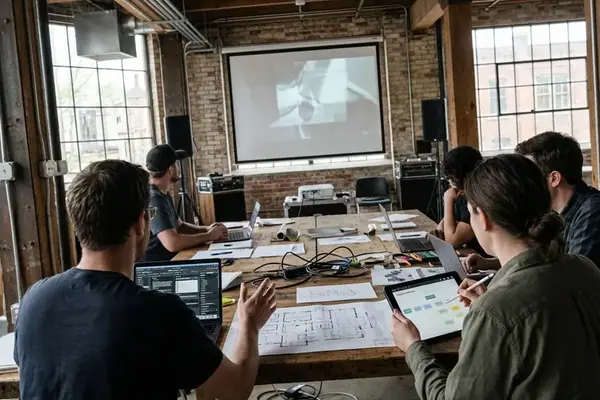
Organizers structured the June 1999 sessions not as formal panel discussions, but as decentralized roundtable critiques to prevent academic hierarchy from dominating community voices. The sessions ran for three consecutive days, requiring participants to commit to something bordering on 14 hours of collaborative dialogue. Travel stipends were allocated from a pooled regional arts grant to ensure attendance from neighboring Rust Belt cities.
Note: Community feedback confirms that removing the elevated stage from these discussions fundamentally shifted the power dynamic toward the working artists.
Curatorial Authority and Academic Partnerships
Institutional memory at Big Orbit depended on deliberate curatorial steps. The 10-year retrospective exhibition spanned 57 days, per gallery data, from March 2 to April 28, 2002. Art historian Elizabeth Licata served as editor of the retrospective and catalog essayist alongside Anthony Bannon, cementing the gallery's historical footprint.
The curatorial committee decided to organize the retrospective catalog chronologically rather than thematically to accurately reflect the evolution of the space's curatorial authority and its shifting focus. Buffalo News reviewer Richard Huntington frequently highlighted how this chronological approach exposed the raw, unedited progression of the local scene.
A common misstep in alternative spaces is isolating from formal institutions out of a misplaced sense of purity. Big Orbit Gallery avoided this trap through academic partnerships with the University at Buffalo to host MFA thesis shows. These exhibitions bridged the gap between student work and public exhibition. They were scheduled during the typically low-traffic mid-winter weeks to guarantee graduating students in the neighborhood of three weeks of public exposure.
Quick Tip: Partnering with academic institutions during off-peak gallery seasons maximizes visibility for emerging artists while stabilizing venue foot traffic.
The Sonic Expansion: Soundlab and Non-Visual Arts
A cavernous, unrenovated industrial warehouse vibrated with overlapping frequencies. The official launch of the Music, Media & Performance Program in March 2000 pushed the organization deep into the Non-Visual Arts. Soundlab dedicated itself entirely to experimental music, creating an immersive environment where audio became a physical presence.
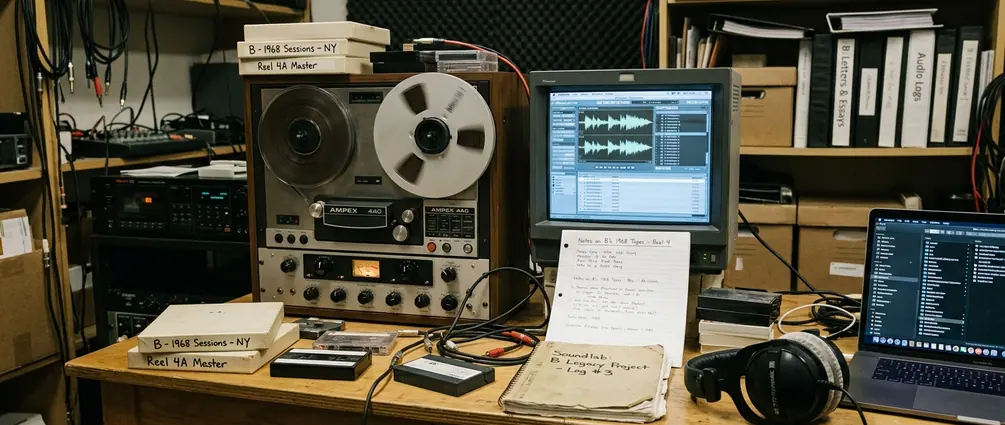
The emotional impact of events like Noise Riot relied heavily on performance strategies like 'collective cacophony'. Its acoustic success depended entirely on the specific architectural decay and reverb times of the unrenovated industrial warehouse spaces.
The primary development phase for the performance program required 14 months, per gallery records, of acoustic retrofitting in the secondary warehouse space. Curators mapped out optimal acoustic zones within the industrial space, assigning specific frequency ranges to different performers to ensure the overlapping sound modules created a cohesive texture rather than noise.
Attempting to apply traditional commercial gallery sales metrics to experimental sound installations resulted in severe under-reporting of community engagement. Gallery accounts suggest that the audio release was limited to a specific pressing run, distributed primarily through independent regional record shops and direct mail.
Aesthetic Threads and the Limits of Categorization
The visual arts programming maintained distinct aesthetic threads, notably the shared technique of collage among featured artists like Russell Ram, Polly Robinson, and Gerald Mead. Mead's conceptual focus on 'The Gaze' manifested through small-scale constructions known as miniature theaters. These were described in curator evaluations as rarely exceeding a 12-by-12-inch footprint.
Nancy J. Parisi transitioned from photojournalism to an aesthetic classified as archetypal by Licata during the 1999 work survey. Curators deliberately sequenced documentary photographs leading into archetypal works along a single continuous wall to visually argue for a narrative progression rather than an abrupt stylistic break. Buffalo News art critic Richard Huntington praised this seamless visual argument as a masterclass in spatial storytelling.
From commission records, grant applications required program definitions to be finalized 9 to 12 months prior to the actual exhibition dates. Securing state-level arts funding demanded rigid programmatic categories. Highly fluid, cross-disciplinary installations often had to be artificially shoehorned into traditional visual or performing arts silos to qualify for certified review by entities like the New York State Council on the Arts.
Summary: While institutional funding stabilized the venue, this rigid categorization often fails to capture the true fluidity of grassroots media arts, forcing dynamic works into static administrative boxes.