Quick Nav
- When Space Becomes the Subject
- Curatorial Framework: Criteria for Selection
- Industrial Reappropriation and Rust-Belt Materials
- Sonic Architecture and Kinetic Forms
- Architectural Subversions and Spatial Disruption
- The Boundaries of the Archive: Scope and Limitations
- The Enduring Legacy of Spatial Interventions
When Space Becomes the Subject
At what exact moment does an object stop behaving like sculpture and begin to occupy the room as an argument?
The traditional gallery encounter asks the viewer to stand back, measure proportion, read a wall label, and move on. Spatial intervention refuses that distance. It interrupts the body before it rewards the eye. A cable crosses the walking path. A slab of oxidized steel leans too near the shoulder. The work does not sit within the gallery; it reorganizes the gallery’s terms of access.
This retrospective examines exhibitions mounted between 1991 and 2007, a period when Western New York’s avant-garde scene treated modest rooms as volatile instruments. Many of the spaces under review, per gallery data, measured under 1,200 square feet, with ceiling clearances of 14 feet. Those proportions mattered. A hanging beam, a low motor, or a forced corridor could alter the entire social choreography of a reception.
Big Orbit Gallery, an exhibition venue rooted in Buffalo’s experimental ecology, forms one crucial site in this account, alongside the wider constellation that includes Hallwalls Contemporary Art Center, University at Buffalo networks, and the critical record shaped in part by Richard Huntington, Buffalo News art critic. The focus here remains precise: pivotal exhibitions that redefined the physical and conceptual boundaries of the region’s spatial avant-garde.
Curatorial Framework: Criteria for Selection
Critical review reveals a useful problem: medium did not hold. The selection committee initially attempted to sort the works by material categories, but that approach collapsed once the records showed how often sculptural steel, acoustic systems, architectural intrusion, and performance residue occupied the same installation. A rusted plate could function as wall, speaker, obstacle, and historical citation in the same room.
The final framework used two governing criteria.
- Spatial Disruption: the work had to alter how a viewer navigated the room, not merely decorate or occupy it.
- Material Dialogue: the intervention had to engage the region’s industrial and rust-belt heritage through material, site memory, or structural behavior.
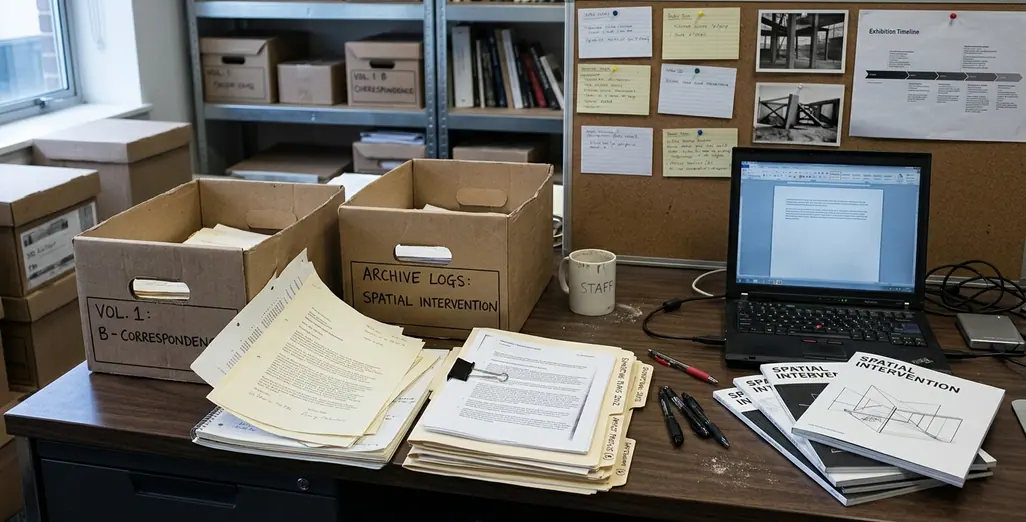
Curatorial review encompassed 412 exhibition proposals and evaluated 84 surviving floor plans from regional experimental archives. The floor plans proved especially useful because they recorded pressure points that photographs often softened: blocked thresholds, narrowed corridors, ceiling loads, and the viewer’s forced detours. Within the surviving Buffalo records, this method describes a documented lineage rather than a total history of every intervention mounted in the region.
Note: The retrospective privileges works that changed the viewer’s path. A large sculpture placed at the center of a room did not qualify unless it reorganized circulation, acoustics, sightlines, or bodily risk.
This distinction matters for Big Orbit: exhibition venue histories because the most consequential spatial works rarely announced themselves as monumental. They often used compression. They made a small room feel structurally alert.
1. Industrial Reappropriation and Rust-Belt Materials
The first group of exhibitions used Buffalo’s industrial afterlife as both palette and pressure. Artists scavenged from decommissioned factories, grain infrastructure, and storage yards along the Buffalo River, then carried those materials into gallery rooms that had never been neutral in the first place.
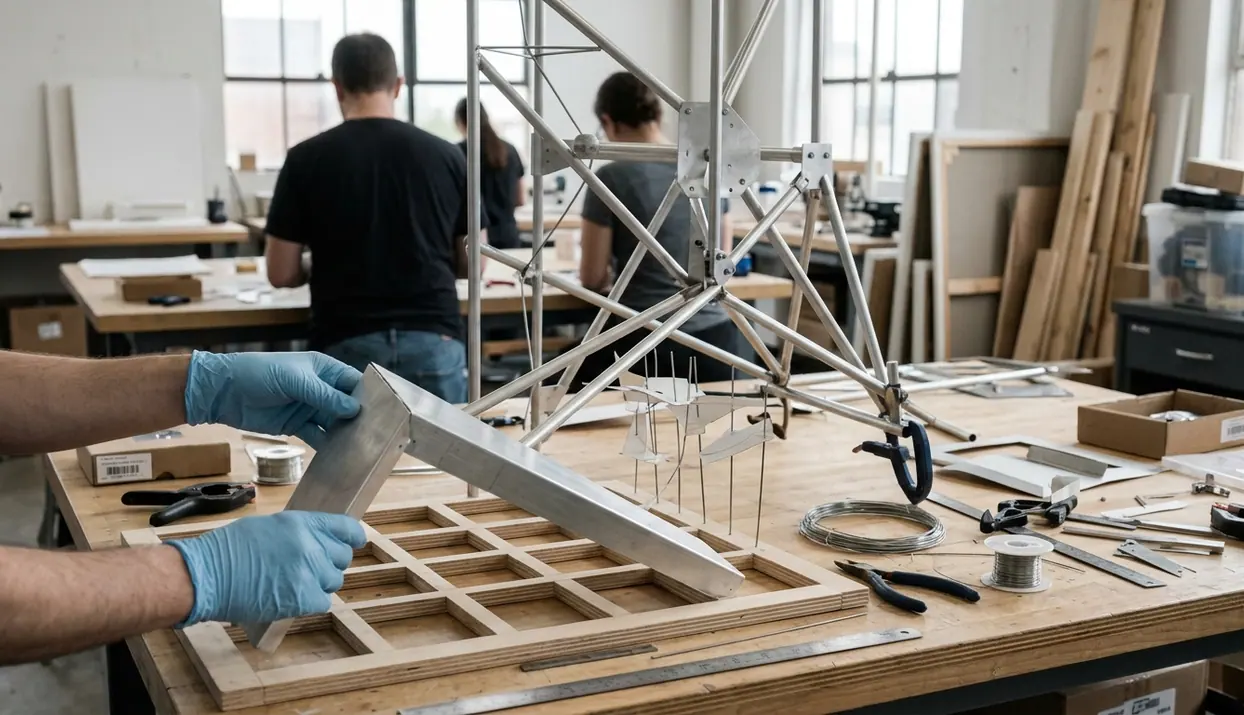
Heavy steel, oxidized iron, untreated slag, and industrial winch cables became spatial propositions. Installation notes from commission records show raw materials often weighing between 400 and 1,800 pounds. That weight changed the behavior of the gallery before the opening began: floors had to be read, thresholds measured, rigging decisions argued through, and placement considered as a structural negotiation rather than a compositional preference.
Curators prioritized works in which artists left industrial grease and oxidation intact. That choice rejected standard gallery conservation habits, but it did not romanticize decay. Grease carried touch. Oxidation recorded exposure. A winch cable salvaged from a grain elevator along the Buffalo River brought with it a history of lifting, dragging, abrasion, and repetition.
The emotional register of these works often arrived late. At first glance, the room looked brutal: brown-black metal, cable tension, slag surfaces, welded joins that refused polish. After several minutes, delicacy emerged in the spacing. A plate hovered just shy of the wall. A cable described a line too taut to ignore. Factory detritus, handled without cosmetic apology, became a precise instrument for measuring post-industrial memory.
Quick Tip: When reading archival photographs of these installations, look for floor contact, wall scars, and blocked sightlines before judging the object’s silhouette. The intervention often lives in those points of friction.
Richard Huntington, Buffalo News reviewer, often worked within the compressed format of newspaper criticism, yet that record remains valuable because it captured immediate civic reception. In this material category, the audience fit was unusually broad. Former industrial workers could recognize residue and hardware; experimental art audiences could read the same material as an argument against pristine modernist display.
2. Sonic Architecture and Kinetic Forms
Some interventions did not simply fill space. They tuned it.
This second category bridges physical sculpture and experimental music, a relationship central to Buffalo’s broader Soundlab-adjacent memory. Kinetic installations used motors, tension, and friction to produce acoustic environments that behaved as architecture. The viewer did not only see the form; the viewer stood inside its output.
In cross-disciplinary projects, several installations used low-RPM motors running at 5 to 15 RPM to drag contact microphones across rusted steel plates. The technical setup sounds spare, almost stubbornly simple. Yet the effect depended on the room: sustained sub-bass frequencies between 30Hz and 65Hz physically vibrated the gallery floorboards, turning the floor into a participant rather than a support.
The contrast with conventional sculpture could not be sharper. A static steel work asks the eye to track mass, edge, weld, and orientation. A sonic intervention asks the body to register pressure. The most compelling examples did not add sound as atmosphere; they made sound the method by which steel disclosed its own instability.
Common interpretive mistakes arise when these works get reduced to documentation of experimental music. The motor was not a performer in the theatrical sense. The steel plate was not merely an instrument. Together they formed a low, grinding architecture that redistributed attention across ankles, ribs, ears, and the gallery’s old floorboards.
Here the archive meets one of its hardest limits. Standard visual records fail to capture the physical impact of sub-bass frequencies in enclosed spaces. A photograph can show the plate, the wire, the motor, and the room. It cannot reproduce the sensation of a floor quietly insisting on its own vibration.
3. Architectural Subversions and Spatial Disruption
The third group treated the gallery’s architecture as raw material. Walls, rafters, corridors, and masonry stopped functioning as background support. They became the surface of intervention.
These exhibitions changed the room through direct structural acts: suspending massive forms from rafters, piercing temporary walls, creating forced-perspective corridors, and fastening tension systems into original masonry. Some structural subversions involved driving 3/8-inch lag bolts directly into the gallery’s masonry. Per gallery data, others suspended up to 600 pounds of tensioned aircraft cable across primary viewing corridors, reducing navigable walking space to 28 inches in width.
That 28-inch passage matters because it shifted interpretation from optical analysis to bodily negotiation. A visitor had to turn slightly, slow down, or decide whether to pass at all. The corridor became a question of consent, scale, and institutional trust.
Purpose-built white-cube galleries and converted industrial spaces behave differently under these conditions. The white cube often hides its structure in service of visual neutrality. Converted Buffalo rooms tend to reveal stress, patching, brick variation, ceiling history, and uneven load logic. Variation in structural load limits between converted industrial spaces and purpose-built white-cube galleries shaped what artists could risk, and what curators could responsibly approve.
The best architectural subversions did not merely damage or dramatize the room. They made existing conditions legible. A lag bolt in masonry could expose the building as a historical body; a suspended cable could turn a viewing corridor into a tensile drawing; a pierced temporary wall could show how fragile the conventions of display really were.
The Boundaries of the Archive: Scope and Limitations
Archival work gives these exhibitions a second life, but not an identical one. Documentation relies heavily on Hi8 video tape and silver gelatin prints. Many physical records suffered emulsion degradation due to improper basement storage between 2008 and 2014, which means that some surviving images now carry stains, fading, and surface instability unrelated to the original work.
The strongest archive admits what it cannot hold.
Photographs preserve placement, massing, and some surface detail. Curatorial notes preserve intention, installation sequence, and occasional conflict. Floor plans preserve circulation. None of those records fully restores the visceral pressure of a narrow corridor, the acoustic tension of a motorized plate, or the sensation of standing beneath a suspended load.
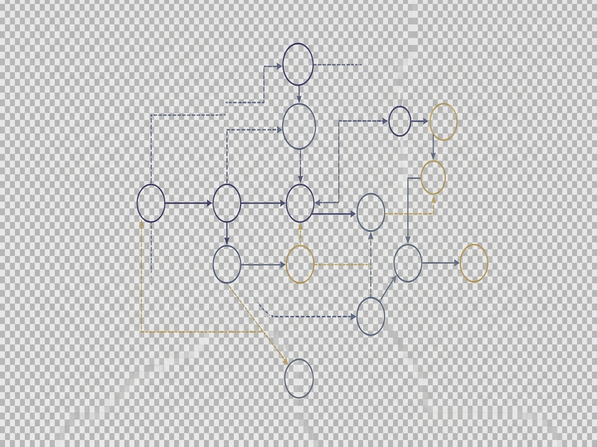
The sonic works demand special caution. Acoustic reconstructions based on surviving schematic diagrams cannot account for the specific resonant frequencies of the original gallery’s plaster walls and tin ceilings, so modern audio reproductions remain approximations at best. That limitation does not weaken the record; it clarifies the difference between documentation and encounter.
Citations: For broader methodological context, the Smithsonian’s Archives of American Art provides useful material on archival documentation of ephemeral installations.
Community feedback confirms a pattern familiar to regional archival researchers: visitors often remember spatial pressure more vividly than object form. The archive can index that testimony, but it cannot fully convert it into evidence without flattening the experience into anecdote. Julian Vance’s field of comparative avant-garde movements is useful here precisely because comparison prevents nostalgia from doing too much of the work.
The Enduring Legacy of Spatial Interventions
These defining shows altered expectations in Western New York. After them, an exhibition could no longer rely on object placement alone. It had to account for the room as a responsive, resistant, historically loaded site.
The shift carried practical consequences. Regional attention moved toward immersive environments that, from commission records, required minimum installation periods of 10 to 14 days. That longer schedule acknowledged what spatial intervention demands: testing, load assessment, acoustic adjustment, circulation planning, and the slow discovery of how a room answers back.
The legacy also changed audience behavior. Viewers learned to read thresholds, ceiling lines, floor vibration, and material residue as part of the work. Artists inherited permission to treat the gallery not as a container, but as a collaborator with a difficult memory. Curators inherited a harder task: to protect safety without sanding away risk.
Summary: The retrospective shows how industrial material, sonic pressure, and architectural alteration formed a distinct regional language. Its force lies not in scale alone, but in the way small rooms became total environments.
Contemporary experimental artists in Buffalo still work in the shadow of those interventions. The influence appears in temporary corridors, resonant floors, salvaged hardware, and installations that ask viewers to feel before they categorize. Big Orbit’s archival efforts preserve that lineage not as a closed chapter, but as a working vocabulary for artists who continue to test where sculpture ends and space begins.