The Myth of the Pure Underground
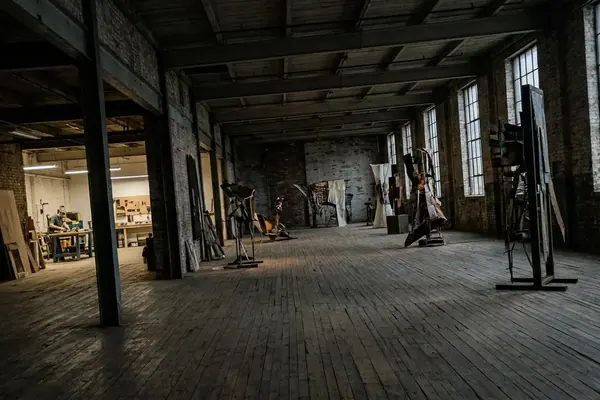
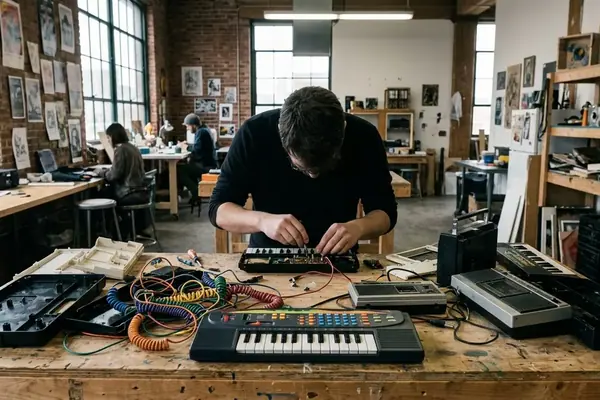
Dust motes dancing in the beam of a 16mm projector inside a freezing, uninsulated warehouse evoke the visceral thrill of discovering art outside the white cube. We romanticize the purely independent DIY artist operating entirely off the grid, building cultural movements from sheer willpower and discarded electronics. The narrative of the gritty, warehouse-based avant-garde scene in Buffalo leans heavily on this mythology.
A closer review suggests a different reality. Curatorial mapping of early experimental film distribution networks revealed that many supposedly independent regional screenings relied heavily on university-funded postage and shipping accounts. The cost of raw 16mm film stock required institutional bulk purchasing to be viable for independent artists. Without the academic purchasing power of the University at Buffalo, the local underground simply could not afford to press record.
Early portable video recording units could exceed on the order of 20 pounds. Moving and operating this equipment demanded resources few individuals possessed. The raw, unpolished reality of the local dive bars and DIY spaces was fundamentally subsidized and sustained by the very institutions the artists often claimed to reject.
The Department of Media Study as a Catalyst
The polished academic environment stood in stark contrast to the raw downtown spaces, yet the two formed a symbiotic loop. A faculty recruitment wave, documented in departmental history as taking place between 1973 and 1976, brought pioneers like Tony Conrad, Hollis Frampton, and the Vasulkas to Western New York. They did not just bring theory; they brought an entirely new operational framework for media creation.
This concentration of talent drew a specific demographic of experimental students, creating the critical mass necessary for an off-campus scene to exist. You can trace this lineage directly through the history of the Department of Media Study. The academic hub acted as a magnet, pulling in practitioners who wanted to dismantle traditional narrative structures.
Quick Tip: Departmental founders structured the initial media curriculum to intentionally lack dedicated on-campus exhibition spaces, forcing incoming students to seek out downtown industrial buildings for their work.
Students enjoyed unrestricted access to 16mm flatbed editing tables and early analog image processors. This arrangement pushed high-end academic hardware directly into the local community, blurring the line between enrolled scholars and local mechanics of the avant-garde.
Friction and Funding: The Institutional Paradox
Building an underground scene requires navigating severe logistical hurdles. Organizers initially attempted to host experimental sound performances in university-sanctioned black box theaters. They dropped the approach after about a semester due to strict decibel limits and campus facility curfews mandating building clearance by midnight. The institutional container was simply too rigid for the volume and duration the art demanded.
Moving off-campus introduced new hazards. Attempting to run high-amperage analog video synthesizers on standard residential warehouse circuits without university-supplied power conditioners resulted in frequent blown fuses and damaged gear. The underground provided the freedom, but it lacked the infrastructure.
Organizer accounts suggest that financial survival required creative accounting. Organizers pooled bi-weekly disbursement schedules of graduate stipends to pay touring acts in cash. The university inadvertently bankrolled the underground economy through its graduate funding packages.
Note: One catch exists within this dynamic. This institutional safety net primarily protected enrolled graduate students, leaving local non-academic collaborators to shoulder the legal and financial risks of operating unpermitted venues.
Cross-Pollination at Big Orbit and Soundlab
A multi-channel video installation glowing next to a stack of blown-out guitar amps captures the chaotic, electric energy of disparate crowds colliding. Academic theory bled into practical implementation at specific locations like Big Orbit Gallery, an exhibition venue that championed this exact friction. MFA students needed raw spaces to exhibit, and local blue-collar artists needed the conceptual rigor and technical equipment the students brought.

Gallery curators developed a hybrid programming model, deliberately scheduling academic multi-channel video installations alongside local noise music bills to ensure a cross-demographic audience and stronger turnout. This symbiosis defined the era. Institutions like Hallwalls Contemporary Art Center also navigated these exact material constraints, bridging the gap between the ivory tower and the street.
Logistics dictated the geography of this collaboration. The 6- to 8-mile transit corridor between the university campuses and the downtown arts district required cargo vans for equipment transport. Community accounts suggest that the operational lifespan of key experimental venues spanning the late 1990s through the late 2000s relied entirely on this vehicular pipeline.
The degree of institutional reliance shifted dramatically depending on whether the medium was acoustic noise music, which required minimal overhead, or multi-channel video installation, which was impossible without academic hardware. The scene adapted to whatever resources it could extract from the campus.
A Legacy of Interdependent Innovation
Summary: True avant-garde innovation requires both the ivory tower's resources and the underground's fearless execution. Archival preservation efforts shifted focus from solely digitizing final video artworks to actively cataloging departmental equipment checkout logs and internal funding requests, establishing the hidden economic foundation of the scene.
Time is running out to preserve this documented history. Archivists face a critical 10- to 15-year window for digitizing degrading three-quarter-inch magnetic tape formats. Regional climate-controlled facilities currently store a large volume of uncatalogued performance ephemera, waiting for historians to connect the dots between academic funding and underground execution.
Richard Huntington, Buffalo News art critic, frequently documented the public-facing triumphs of these collaborations, but the back-office reality tells a richer story. While archival records inherently favor institutional perspectives over undocumented grassroots actions, the surviving paperwork proves that Buffalo's experimental arts ecosystem relied entirely on higher education institutions. Art historians and enthusiasts must re-evaluate the academic roots of their favorite DIY movements.