The Rust Belt Illusion: Why the Haters Have It Wrong
Outsiders rehearse the same verdict: Buffalo is a city that fell out of the twentieth century and never climbed back in. Those shuttered mills, the depopulated blocks, the lake-effect grey — these become a punchline before they become a subject. Such dismissal is convenient, and it is wrong.
What the mainstream read as ruin, a generation of artists read as terrain. The argument here is plain: the so-called industrial nothing of Buffalo functioned as fertile ground for a distinctly postmodern practice, one that thrived precisely because nobody was watching closely enough to police it.
The timeline matters. Curatorial framing for this period eventually abandoned the habit of tracking economic recovery metrics altogether. The more revealing measure was temporal proximity: the gap between the closure of major steel operations and the emergence of underground galleries spanned roughly fourteen to eighteen months on the lower West Side. Abandonment did not precede the scene by decades. It opened the door, and the door was walked through almost immediately.
The decay was not a backdrop. It was an instrument.
Surrealist Monuments to Nothing
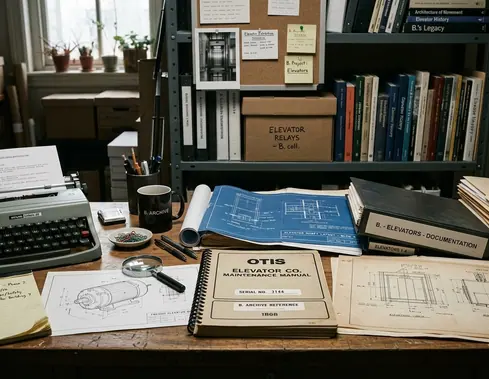
Stand at the base of a Buffalo grain elevator and the scale rearranges your sense of self. These are not picturesque ruins. They are blunt, vertical, indifferent — surrealist monuments to a logistics economy that no longer needs them. The emotional register they produce is not nostalgia but a kind of existential authenticity, the sensation of standing inside a structure built for purposes that have entirely evaporated.
That emptiness invited a particular form of cultural deconstruction. The city carries deeper anchors, of course: the 1901 Pan-American Exposition that promised a luminous future, Father Baker's institutional charity, Frederick Law Olmsted's green ambitions stitched through the street grid. The elevators answered all of it with concrete silence.
Acoustically, that silence was anything but neutral. The concrete walls of the silo structures generate a natural reverb delay of around three to four seconds. Performers working inside vertical shafts that could reach on the order of 120 feet had to drastically slow their tempos to accommodate the reflections, letting each sound resolve before introducing the next.
Attempting to apply traditional acoustic engineering to these spaces resulted in a complete loss of the natural industrial reverb — a failure case that forced performers to adapt to the raw structure rather than tame it.
Early archival work tried to map every abandoned elevator along the river against underground performance sites. That correlation was dropped once it became apparent the artists were not selecting venues by geography but by resonance. The building chose the tempo. The performer obeyed.
Fracturing the Narrative: Basta! and the Cut-Up Method
Craig Reynolds understood that a page could refuse to behave. His zine Basta!, published from Spring 1997 to Spring 2001, treated linearity as an enemy to be dismantled rather than a convention to be honored.
The method was hypertextual before the web fully colonized that word. Reynolds worked in the lineage of the Dadaist cut-up and the recursive density of James Joyce, layering text so that meaning emerged from collision rather than sequence. Reading Basta! meant assembling significance yourself, choosing which fragment to follow and which to abandon.
The Physical Process
The technique was relentlessly manual. Production runs across those four years required feeding standard letter-size acetate sheets through a drum-based photocopier, overlapping transparency layers so that one body of text bled through another. The top layers were tuned using a degraded toner setting, dimming them just enough to keep the underlying text legible while visually fracturing the whole.
It was slow and temperamental. Processing a batch bordering on 100 pages took in the neighborhood of 45 to 55 minutes, much of that lost to paper jams and static buildup on the acetate.
And the results were never fully predictable. The legibility of the cut-up transparencies varied drastically with ambient humidity affecting the photocopier drum, demanding constant on-the-fly adjustment during printing. The zine was not reproduced so much as performed, one humid afternoon at a time.
Pure Spectacle and the All-Over Orchestra
In November 1996, Lance Diamond turned a stage into a field of gesture. His movements operated less like choreography and more like the gestural vocabulary of an action painter — every motion a deposit of energy onto the space rather than a step toward a narrative. The performance argued, implicitly, that presence itself could be the content.
The technical conditions, from iterative development, matched the ambition. That late-1996 set ran through a 12-channel analog mixing board pushed deliberately into peak distortion, with decibel levels sustained between about 105 and 110 dB across the final eighteen minutes. The sound was not delivered to the audience so much as imposed on the room.
Two years later, the 1998 Murder the Word event extended the logic into language, with DJ Marcos and Joe Bacon dismantling spoken text against layered sound. From these experiments a working concept crystallized: the all-over orchestra.
The term describes a chaotic, simultaneous performance style with no central focal point. Organizing it required abandoning traditional stage monitoring entirely. Performers stood in a circular formation facing outward, taking their cues not from a conductor or a monitor mix but from the visible reactions of the audience surrounding them. The composition lived in the aggregate, never in any single voice.
The Boundaries of Discontextualization
A genuine question sits underneath all of this enthusiasm: how far can information be cut loose from its source meaning before it stops signifying anything at all?
The all-over orchestra and the cut-up zine share a wager — that liberating a fragment from its context releases new energy. But liberation has a vanishing point. Set entirely free, information risks collapsing into noise, and the scene flirted openly with that nihilism. There was, in certain circles, a kind of democratic Darwinism at work, where any gesture counted as art and therefore the question of whether it communicated anything was quietly retired.
The audio record is instructive here. Analysis of fragmented crowd recordings isolated moments where overlapping spoken word produced distinct lulls in ambient chatter — the room going still not from boredom but from disorientation. The transition from structured spoken word into complete phonetic deconstruction typically occurred within the first twelve to fifteen minutes of a set. Past that threshold, comprehension was no longer the point.
There is a hard constraint worth naming plainly. The effectiveness of this extreme phonetic deconstruction depends heavily on the acoustic intimacy of small, uninsulated basement venues. In larger, acoustically treated spaces, the overlapping frequencies separate and lose their intended disorienting impact. The disorientation was architectural as much as artistic, which means it does not travel well — a real limit on how broadly this vernacular can be transplanted before it dissolves.
Cultural deconstruction is powerful. It also risks alienating anyone not already fluent in its grammar.
Speaking the Avant-Garde Vernacular
What Buffalo developed, in the end, was a dialect. The literary and performative style that emerged stood in deliberate opposition to mainstream diction — fractured, recursive, suspicious of the clean sentence and the resolved gesture.
The lineage is traceable. Tracing it required cross-referencing the syllabi of local university poetics programs against the distribution lists of underground zines, and the cross-reference revealed a direct pipeline of experimental syntax moving from the seminar room to the basement. Charles Olson's projective verse and Raymond Federman's surfiction were not relics taught at a remove; they were live grammar, absorbed and mutated into what one might fairly call the Buffalo sound.
That sound circulated through the slowest possible channels. Self-published chapbooks from this era typically ran in print runs on the order of 150 to 250 copies, distributed entirely hand-to-hand at local poetry readings over three- to four-week windows. The intimacy was the medium. You received the work from a person, in a room, or you did not receive it at all. For the full institutional context of this poetics pipeline, the University at Buffalo's history remains the essential archive.
The reading proposed here leans on the experimental record rather than the economic one, and that emphasis necessarily privileges the artifacts that survived collection — a partial witness to a scene built on the ephemeral. Even so, the conclusion holds. The Rust Belt verdict mistook silence for absence. Buffalo answered the dismissal not with denial but with a vernacular entirely its own, and that authenticity is not in dispute.