The Institutional Filter Sanitizes the Underground
Institutional archiving often begins with an act of selection disguised as routine administration. Grant files receive stable titles, dates, and storage boxes. Informal evidence arrives late, without metadata, or never enters the repository. The resulting archive appears orderly while the experimental scene it describes was provisional, collaborative, and frequently chaotic.
One archival comparison makes the distortion visible: three linear feet of municipal funding applications sit against a single folder of undated performance flyers. The funding files document applicants, budgets, and approved language in exhaustive detail. The flyers preserve a thinner yet culturally vital layer: improvised bills, temporary venue names, hand-drawn symbols, and participants who never appeared on a formal application. Volume becomes a deceptive proxy for importance.
Intake delays deepen the problem. When material enters an archive after a delay in the neighborhood of 18 to 24 months following an exhibition, contextual objects have usually dispersed. Annotated floor plans remain in a studio drawer; an artist reuses a projection surface; a volunteer discards the handwritten running order. The formal record then privileges what bureaucracy required over what the event produced.
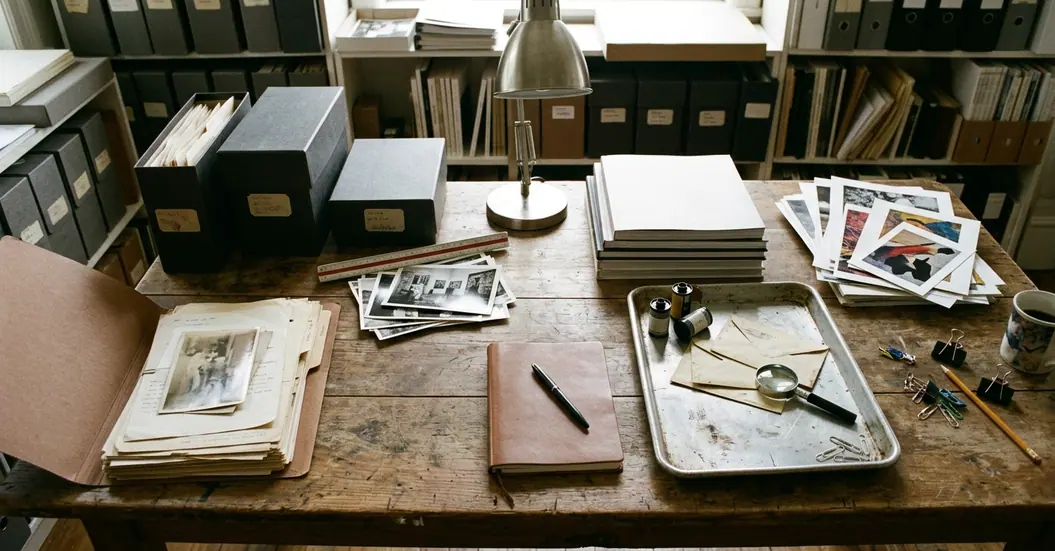
The Filing Distortion
A gallery record can identify a headliner and an exhibition date while omitting the labor, improvisation, and social friction that made the event possible. Researchers should read administrative abundance as evidence of institutional procedure, rather than complete cultural memory.
This imbalance matters when reconstructing the lineage around Big Orbit Gallery: exhibition venue, Hallwalls Contemporary Art Center, or the University at Buffalo. Each institution occupies a distinct position within Buffalo’s cultural ecology, yet the documents most likely to survive tend to share the same administrative grammar. Even criticism by Richard Huntington, Buffalo News art critic, offers a framed public encounter rather than an inventory of every person, adjustment, and contingency in the room.
Paper Trails Lose the Pressure of Ephemeral Work
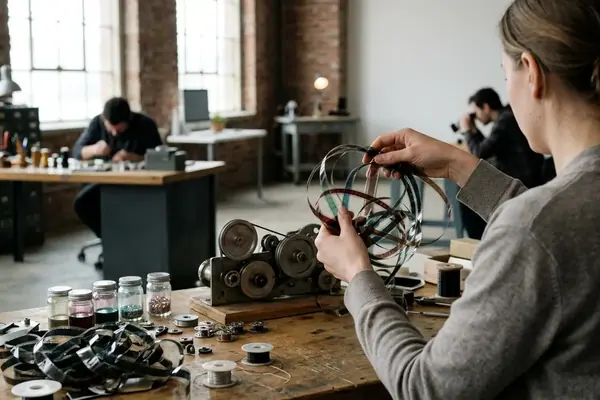
A noise performance lasting on the order of 15 to 45 minutes may leave almost nothing that resembles an artwork. Its physical remnants can amount to blown fuses, discarded patch cables, and temporary acoustic dampening materials. None conveys the sensation of standing near an overloaded speaker while the room’s architecture begins to behave like part of the instrument.
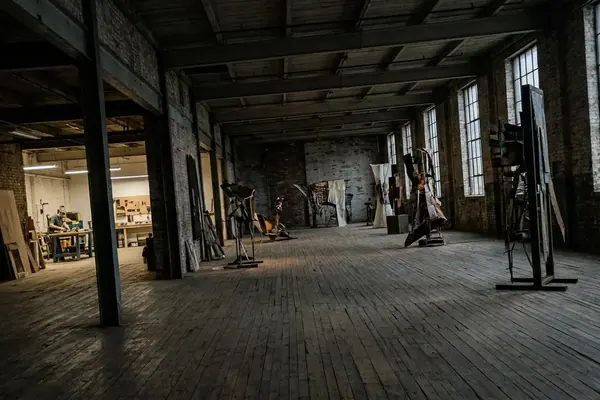
Installation art creates a related archival mismatch. A press release can describe a spatial intervention, and a photograph can fix one sightline, yet the visitor encountered changing light, obstructed movement, uneven sound, and other bodies negotiating the same floor. A clean installation image often suppresses the extension cords, last-minute repairs, and improvised barriers that reveal how the work actually occupied the site.
Oral history carries dimensions that paper cannot hold: the perceived duration of a sustained tone, the moment an audience stepped backward, the smell of heated equipment, or the argument that followed an abrupt ending. Memory introduces uncertainty, but that uncertainty belongs to the event. Experimental culture develops through partial attention and divergent interpretations; a record that removes those tensions also removes part of the work.
Atmosphere as Archival Evidence
The strongest interview questions begin with sensory location. Where was the listener standing? Which sound reached the room first? Who moved equipment after the power failed? Such prompts recover spatial and emotional knowledge without forcing participants to translate the evening into curatorial language.
For an exhibition venue such as Big Orbit, the distinction is crucial. A flyer proves that a performance was announced. A recollection can explain how the performance altered the room, unsettled its audience, and entered the scene’s shared vocabulary.
Official Rosters Remove the People at the Edges
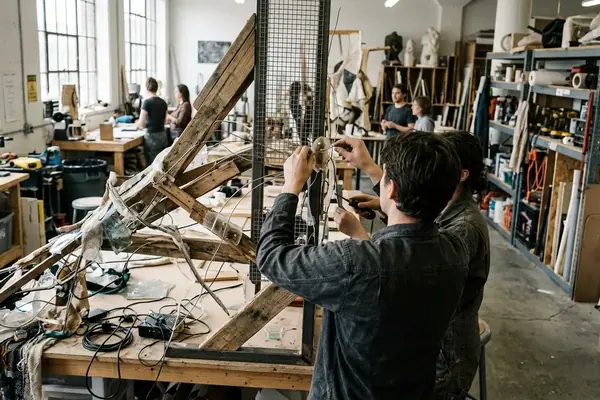
Gallery rosters usually preserve the names closest to institutional access. Exhibition logs from 2008 to 2012 listed primary grant recipients, establishing a legible sequence of credited artists while leaving the production network largely invisible. For a single weekend installation, that network could include 12 to 15 uncredited sound technicians and visual projectionists.
The omission changes interpretation. A projectionist may have translated an artist’s rough instruction into a workable image path. A sound technician may have rerouted a failing signal chain during the performance. An underground organizer may have found the temporary space, secured borrowed equipment, and contacted performers. When these roles disappear, later readers encounter the fiction of solitary authorship.
Transient collaborators face the greatest risk. Touring musicians, short-term residents, volunteer installers, informal hosts, and participants from marginalized communities often leave fewer contractual traces than a primary grantee. Their absence from a roster can look neutral because the archive rarely records the decision that excluded them. Over time, repeated omissions produce a history weighted toward people who already knew how to pass through institutional systems.
Roster Threshold
The decisive archival threshold appears where primary grant-recipient logs stop and the uncredited technicians, projectionists, hosts, and organizers begin. Any reconstruction that ends at that line mistakes administrative credit for the full social structure of the work.
What Curatorial Records Still Preserve
Traditional curatorial documentation remains useful. It can establish dates, principal participants, venue locations, and the public language attached to an exhibition. Those coordinates allow researchers to compare a Big Orbit exhibition venue record with a contemporary review or a related program elsewhere in Buffalo.
Its scope has a hard boundary. Oral histories can fill roster gaps only while original participants remain reachable within the regional arts ecosystem. Once transient collaborators relocate, technical credits become nearly impossible to reconstruct. That constraint makes early recording an archival priority rather than a retrospective luxury.
Raw Memory Requires a Different Interview Method
A formal questionnaire can reproduce the very filter that oral history seeks to escape. In one documentation effort, interviewers began with university-style release forms and structured questions. After three weeks, participants were giving guarded, overly formal answers shaped by the apparent expectations of the interview setting.
The project shifted to unscripted, peer-led audio conversations in familiar studios. Handheld field recorders replaced a formal studio setup, reducing the pressure to deliver a polished historical account. Sessions ran from 45 to 90 minutes, long enough for participants to move beyond prepared summaries and into technical details, interpersonal tensions, and uncertain recollections.
Build the Recording Around the Room
- Start with an object. Place a flyer, setlist, patch cable, or installation photograph within reach. Material evidence gives the conversation a specific point of entry.
- Ask for sequence before meaning. Invite the participant to describe arrival, setup, performance, and breakdown. Interpretation often emerges naturally from chronology.
- Follow names sideways. When a technician, host, driver, or projectionist appears in the story, pause to record the person’s role and connection to the event.
- Keep contradictions audible. Separate speakers may remember the same power failure or audience reaction differently. Preserve both accounts instead of editing them into agreement.
- Record the descriptive metadata immediately. Note the place, approximate event date, interviewer, speakers, referenced objects, and any access restrictions while the session remains fresh.
The Oral History Association’s principles and best practices for oral history provide an ethical frame for consent, stewardship, and access. Experimental arts communities can apply that frame without importing the emotional temperature of a university interview room.
Conversational form should never mean careless custody. Participants need to understand where a recording will live, who can hear it, and whether sensitive passages require temporary restriction. Keep the untouched audio master alongside any edited version so future listeners can distinguish the participant’s account from later curatorial decisions.
Contradiction Is Part of the Record
Conflicting memories reveal how experimental scenes assign value. One participant may remember a performance as a technical collapse; another may describe the same disruption as its defining aesthetic gesture. The contradiction identifies a live argument about intention, competence, and risk. Flattening those accounts into a single authorized story would repeat the sanitizing logic of the formal archive.
Experimental Communities Must Preserve Their Own History
Decentralized preservation begins before institutional recognition. Participants already carry the necessary tools: phones, handheld recorders, scanners, shared storage, and firsthand knowledge of who performed the uncredited work. The urgent task is to establish a routine while names, objects, and spatial details remain recoverable.
A practical cycle moves raw audio files and scanned setlists to decentralized community servers within 48 to 72 hours after an event. A weekend of performances may require 4 to 6 gigabytes of storage, a manageable burden when participants distribute custody rather than relying on one organizer’s laptop. Each deposit should retain original files, basic metadata, consent terms, and at least one duplicate in a separate location.
- Record a short post-event conversation with performers, technicians, projectionists, and organizers.
- Scan marked setlists, equipment diagrams, flyers, and floor notes before they scatter.
- Preserve raw recordings alongside access copies.
- Assign more than one community member responsibility for storage and retrieval.
- Revisit names and credits promptly while collaborators remain reachable.
Museums and universities may eventually provide durable stewardship, but their intake schedules should never determine when a scene begins remembering itself. Avant-garde history survives through repeated acts of local custody, shared description, and candid testimony.
Every experimental venue should adopt a 72-hour preservation routine after its next event and place the resulting files under shared community control.