
The Methodological Swap of Buffalo's 1990s Underground
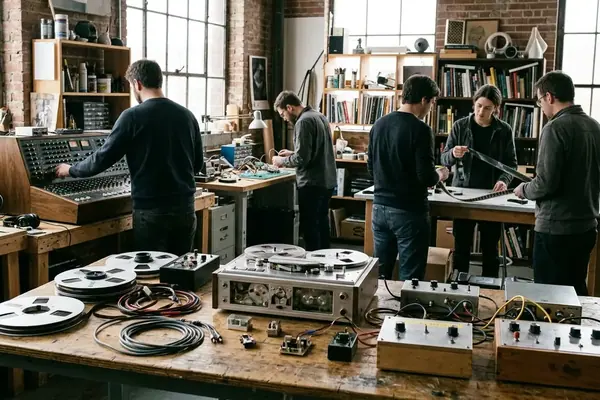
Archivists processing the certified 1994-1996 archival collections initially categorized the era's output by traditional mediums, separating audio cassettes from sculptural maquettes. This conventional approach fractured almost immediately. Where retrospective cataloging by University at Buffalo researchers indicates a breakdown in standard documentation, the submission of frequency logs in place of architectural blueprints emerges as the defining characteristic of the period. The central development among 1990s Buffalo collectives was the complete methodological inversion between sonic and visual disciplines. Sculptors adopted frequency as their primary material. Musicians adopted spatial mass.
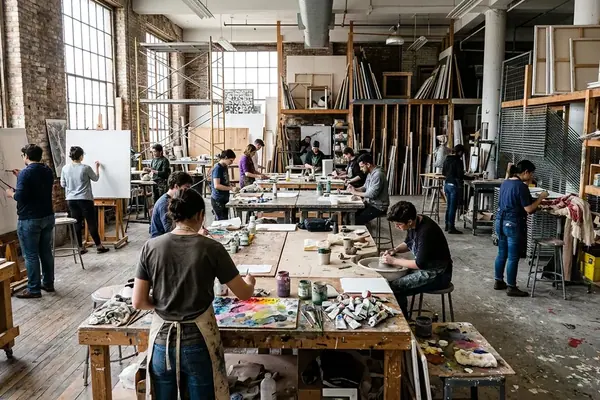
These disciplines actively cannibalized each other's fundamental tools. Time-based audio transformed into physical architecture, while static sculpture dissolved into acoustic decay. The staging grounds for this inversion, notably Big Orbit Gallery and Hallwalls Contemporary Art Center, functioned less as exhibition spaces and more as sites for sensory mutation. Artists stopped sharing gallery space and began dismantling the boundaries of their respective crafts.
Treating the Industrial Gallery as an Acoustic Chamber
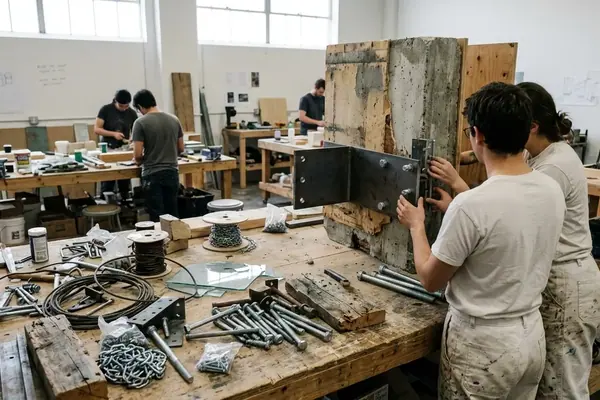
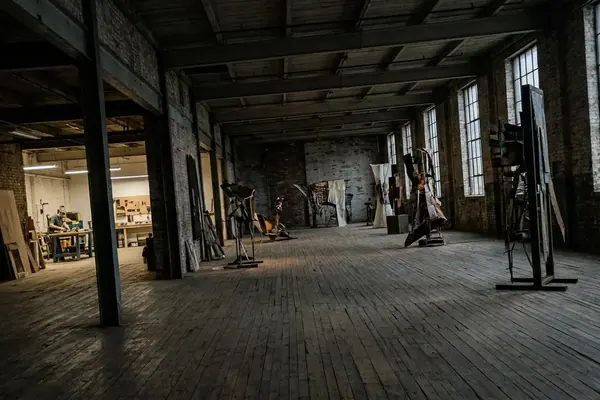
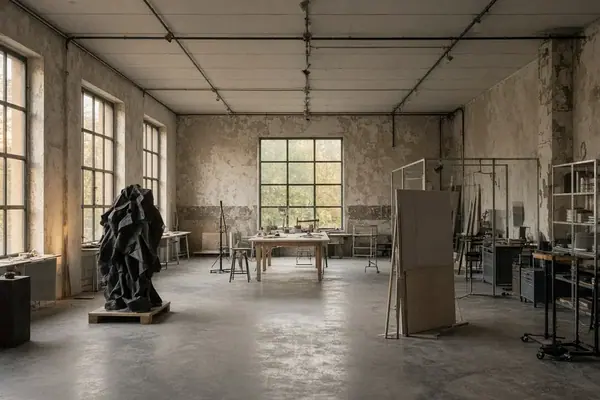
Exhibition records from the era reveal a deliberate shift away from the pristine white cube. Curators and artists began treating the industrial gallery as a massive, resonant instrument. The physical characteristics of Big Orbit—specifically the 14-foot ceiling clearances in repurposed industrial spaces—provided the necessary volume for these experiments. Installations frequently utilized 1/4-inch rusted steel plates and 200-pound tension wires, materials chosen strictly for their vibratory potential rather than their visual weight.
One catch: relying on archival exhibition records from 1993 to 1998 captures only the physical remnants, completely missing the 400-millisecond acoustic decay that defined the actual spatial experience. The visual texture of these exhibitions was entirely dictated by the acoustic properties of the industrial materials. A rusted steel plate was valued for the specific harshness it imparted to a sound wave bouncing off its oxidized surface. The gallery became a chamber where visual aesthetics were a byproduct of sonic necessity.
Tracing the Timeline of Visual and Sonic Contagion
Mapping the progression of this cross-disciplinary influence requires examining specific late 1994 installation timelines. Early experiments attempted to merge sound and object by outfitting standard gallery pedestals with contact microphones. Curators quickly abandoned this approach when the MDF wood absorbed the resonance, deadening the sound before it could interact with the room. The breakthrough occurred when artists discarded traditional display furniture entirely.
By suspending raw aluminum directly from the ceiling joists, practitioners achieved reverberation loops nearing 45 seconds. The audience's physical movement through the space generated the sonic experience, turning passive observation into active acoustic disruption. Buffalo News reviewer Richard Huntington documented this transition, noting how discrete, isolated art objects were replaced by holistic, time-based environmental experiences.
Acoustic Deadening Risks
Attempting to recreate these installations in modern, drywall-lined white-cube galleries results in a deadened acoustic profile that nullifies the intended spatial mass. The architecture itself must offer resistance. Without the hard, reflective surfaces of industrial brick and concrete, the low-frequency vibrations dissipate, leaving the suspended materials looking like inert scrap rather than active sonic components.
The Enduring Blueprint of Western New York Collectives
The methodological swapping pioneered in Buffalo laid the groundwork for contemporary installation art. Curators assembling retrospective catalogs in the early 2010s decided to group these works by their industrial material origins rather than their aesthetic output. This curatorial shift highlighted the integration of decommissioned grain elevator components as a unifying regional characteristic. The raw, industrial aesthetic of Western New York directly informed the harsh, textural qualities of both the visual and sonic outputs.

The specific resonant frequencies achieved depended heavily on whether the artists sourced their scrap metal from automotive stamping plants or decommissioned grain silos. Automotive steel produced a sharp, immediate attack, while the thicker, weathered iron from the silos generated a sustained, rolling low-end. Buffalo News art critic Richard Huntington frequently highlighted how this hyper-local material sourcing anchored the avant-garde experiments in the working-class reality of the city. This era remains a vital case study for those exploring the intersections of art, science, and technology, demonstrating how regional industry can dictate avant-garde form.
Apply the 1990s Cross-Disciplinary Framework Today
When designing contemporary workshops based on this era, facilitators structure an initial sensory restriction period on the order of 48 hours entirely around sensory deprivation in the practitioner's primary medium. This forces visual artists to navigate the space via low-frequency oscillators, stripping away their reliance on sight and demanding an engagement with spatial volume through sound.
Sensory Restriction Protocols
Select one fundamental methodology from a discipline outside your own. If you are a painter, adopt rhythmic sequencing; if you are a musician, utilize spatial scale and physical mass. Apply this foreign methodology to your current creative project to break habitual patterns of production.
Execute your next piece entirely through this borrowed framework. Document the specific points of friction that occur when forcing a visual concept through a sonic filter, or a sonic concept through a visual medium. Use those exact points of resistance as the structural foundation for your final installation.